
SICA Celebrants Collaborate to Learn about Rituals in Ceremony
by Fleur Hoole, SICA Committee Member, East Lothian.
SICA CPD Event – Exploring Rituals
8th March 2026
A keen and cooperative collection of SICA celebrants gathered at the wonderfully welcoming Subud Centre in Perth on Sunday the 8th of March for a day of learning from each other and sharing best practice and experience in order to explore various rituals which can enhance the meaning and bring additional depth to the ceremonies we offer.
The day started with a warm, reflective welcome from our chairperson, Diane, who then led a flower and candle ceremony to set our intentions for learning, sharing and reflecting on the work of the day. Through participation and discussion, various options and adaptations to the ritual were then explored, such as lighting floating candles in recognition of the contribution of loved ones, such as grandparents in a naming ceremony, or each guest choosing and adding a flower to add their individual good wishes for the people at the heart of the ceremony.
Next, Lynda talked through the history of Oathing Stones, particularly in Scotland, and how their properties, tactile nature and direct link to their place of origin may add significant personal meaning when used in ceremony. From blessing the stones, to setting them with the intentions spoken during vows, and inviting guests to each channel their hopes and love for a baby or couple before adding them to a keepsake vessel… there are many ways to include oathing stones to add weight to ceremonial actions.
This was followed by a chat about the ancient and current uses of the Quaich in ceremony, as a vessel that is designed to epitomise sharing and building trust – for couples, or to welcome and unite families and the community in which they live and love. There was general agreement that traditions, including holding the empty quaich over another’s head, or the Orcadian “cog” become ritual only when steeped in intention to honour what is centrally important to the people at the heart of the occasion.
Our thoughts then turned to the value and use of silence during ceremony, with Cate sharing reflections about the value of adding moments of silence at significant moments such as before couples make their vows, or for people to pay their respects, or offer a private prayer at an appropriate moment in a ceremony. Cate also encouraged embracing silence in conversations, such as during client meetings, with the idea of “choosing to respond with the grace of silence.”
Next it was back to Lynda, who held a short and beautiful sand ceremony for an attendee, explaining the meaning of the choice of colours and significance of this ritual, which is often used to show unity between couples or families, but can also be used for healing, or to show support for someone. Following this, she talked us through various ideas and practicalities in preparing for and supporting people to take part in a sand ceremony, such as to check the coarseness of sand that may be brought from a favourite place, as course sands take longer to descend, and finer sands on top may work their way between the grains – demonstrating how people’s lives merge with others over time.
After a delicious and plentiful lunch, the celebrants met outside on the lawn for a demonstration of how to use a grief mandala using natural (and usually found) items in a ritual for processing and releasing grief, either for an individual or small group. There was then a chance to take part in a communal grief mandala expressing the shared grief of the escalating war-zones across the globe, and sending a hope for all those affected to find courage, community and peace. Please note that although the picture shows these mandalas on tarpaulins – usually they are left in place for the forces of nature to disperse the grief over time.
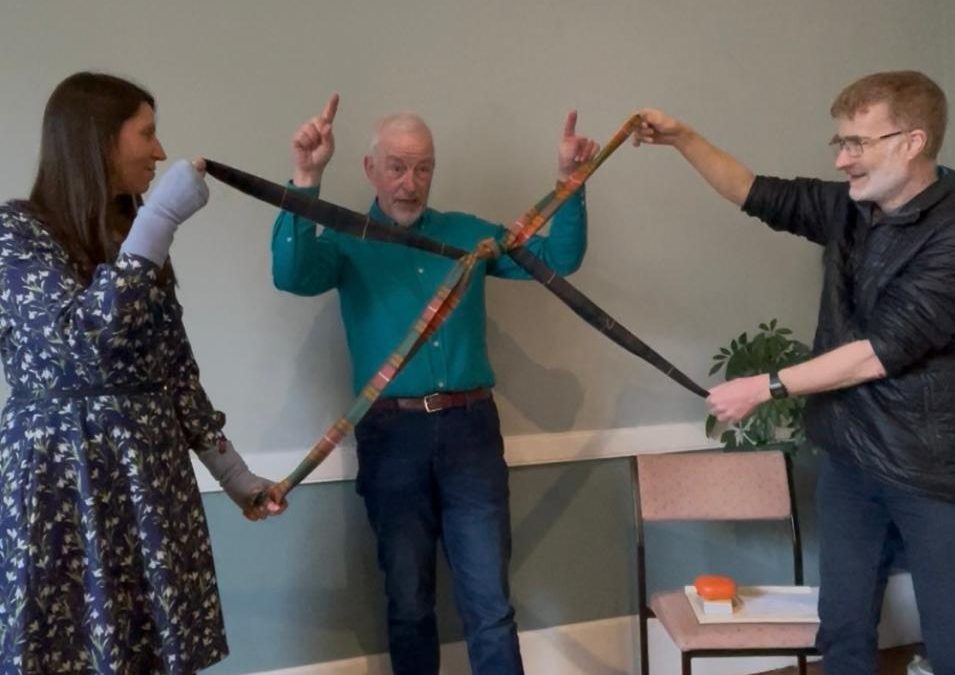
Once back indoors, Gordon talked through the historical context of handfasting as an act of betrothal which symbolises and binds a couple’s commitment to each other. This was followed by a lively and interactive reenactment of handfasting with different people demonstrating their favourite methods of assisting couples to “tie the knot.” A key message was to that celebrants should practice this with their couple in advance of the ceremony!
Lastly, Lynda showed her demonstration “besom” which showcases different ways that couples may choose to personalise their broom, such as with charms, flowers or tartan. The practicalities of keeping this ritual safe were outlined, recommending that those wearing long dresses “jump” over the handle end, and that couples hold hands to safely step into their future together – literally demonstrating that two are stronger than each on their own.
The day finished with a reflective and appreciative closing ceremony led by Diane, before the flame of the day’s learning was gently blown out, leaving all involved with bright memories of the day’s shared learning in a wonderful community of celebrants.
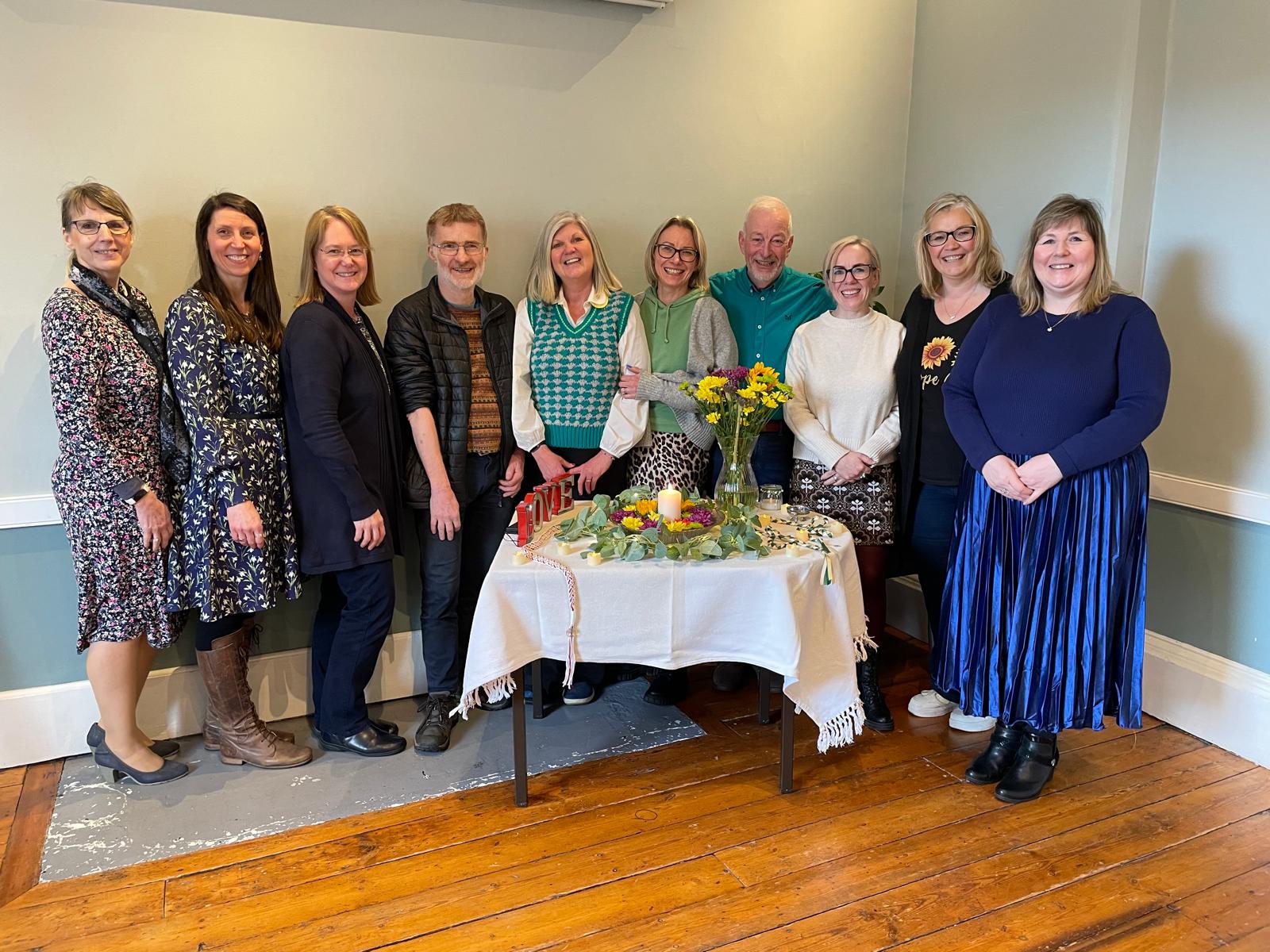
Attendees
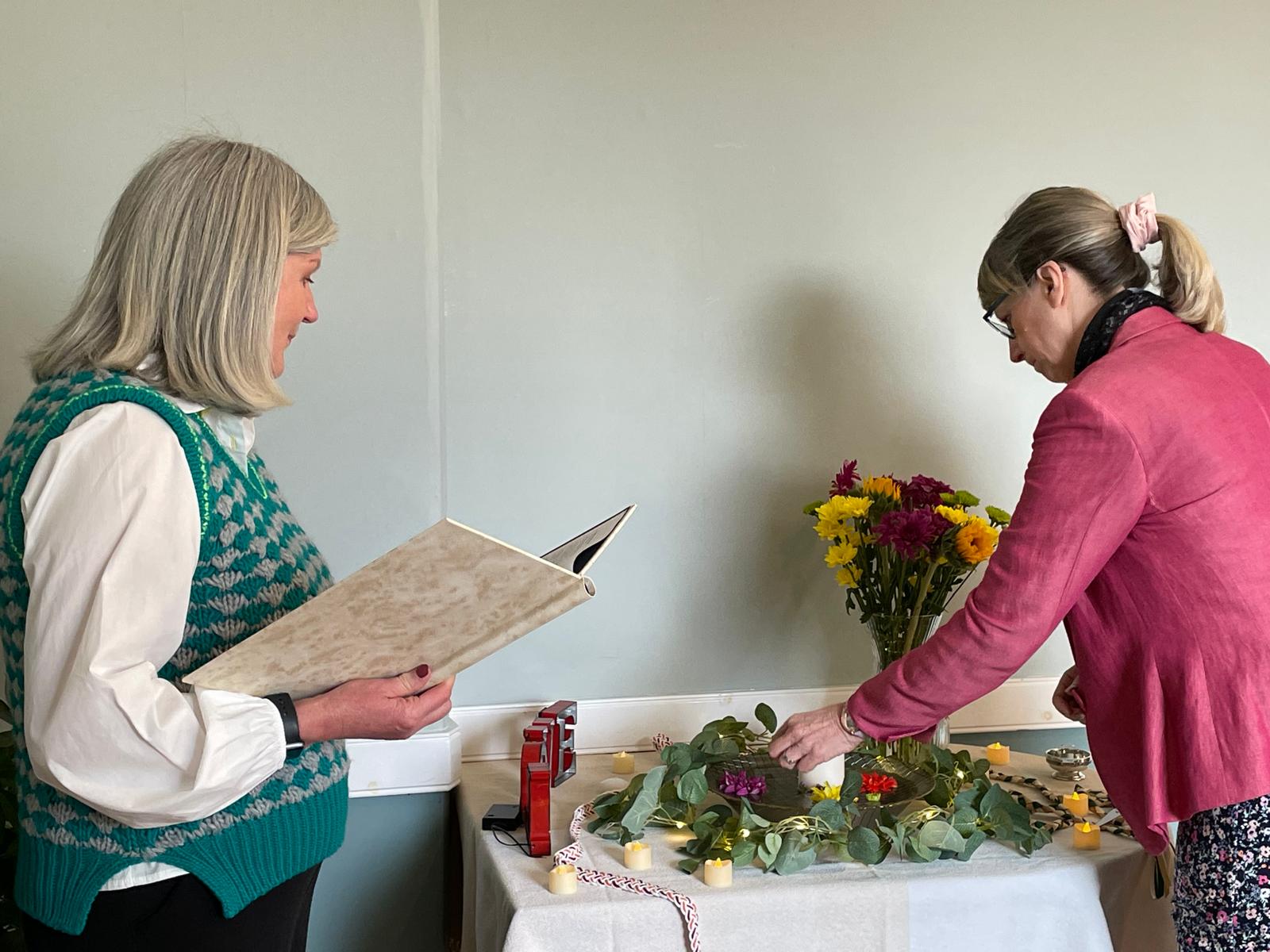
Flower Ceremony
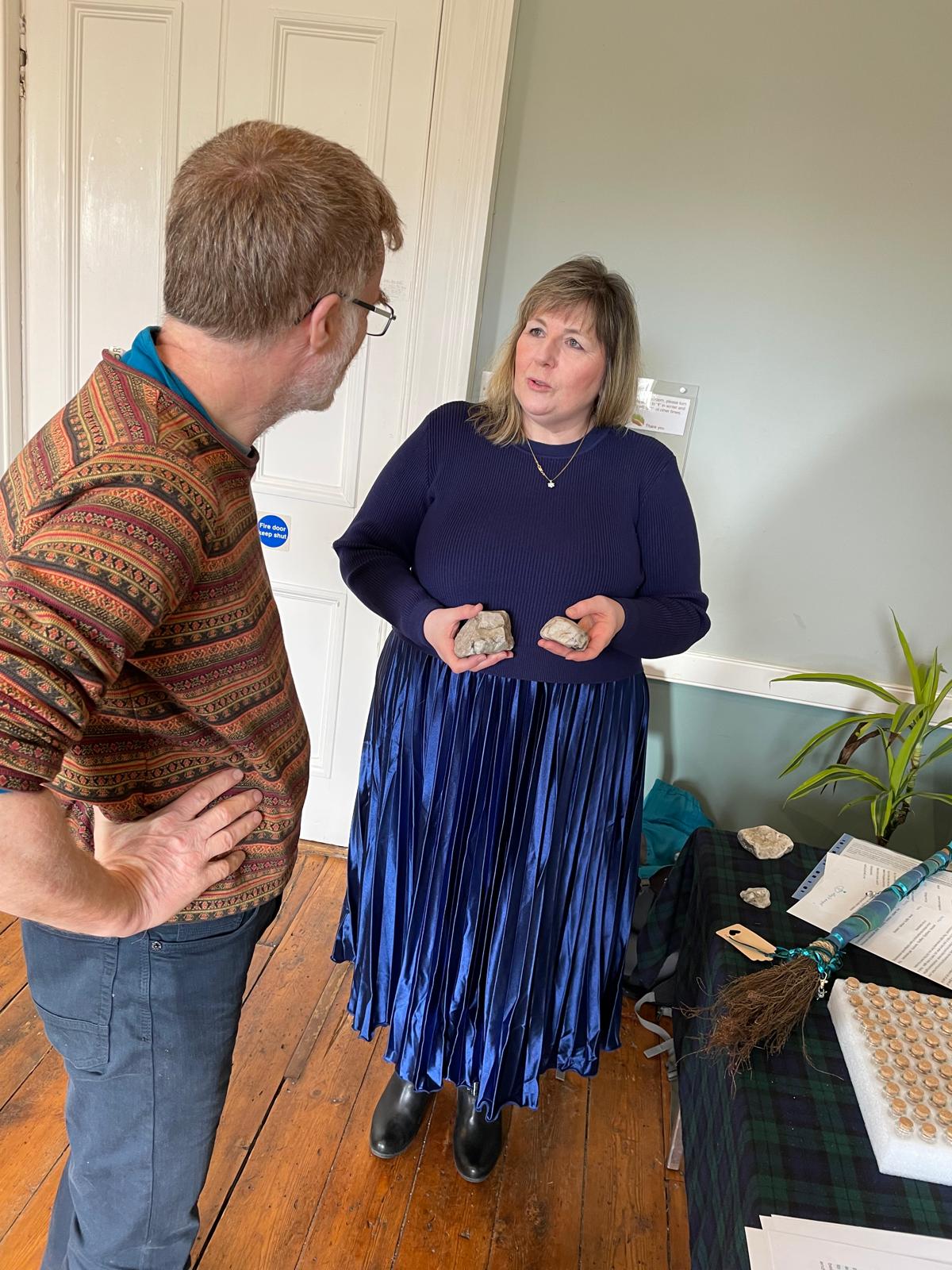
Oathing Stones
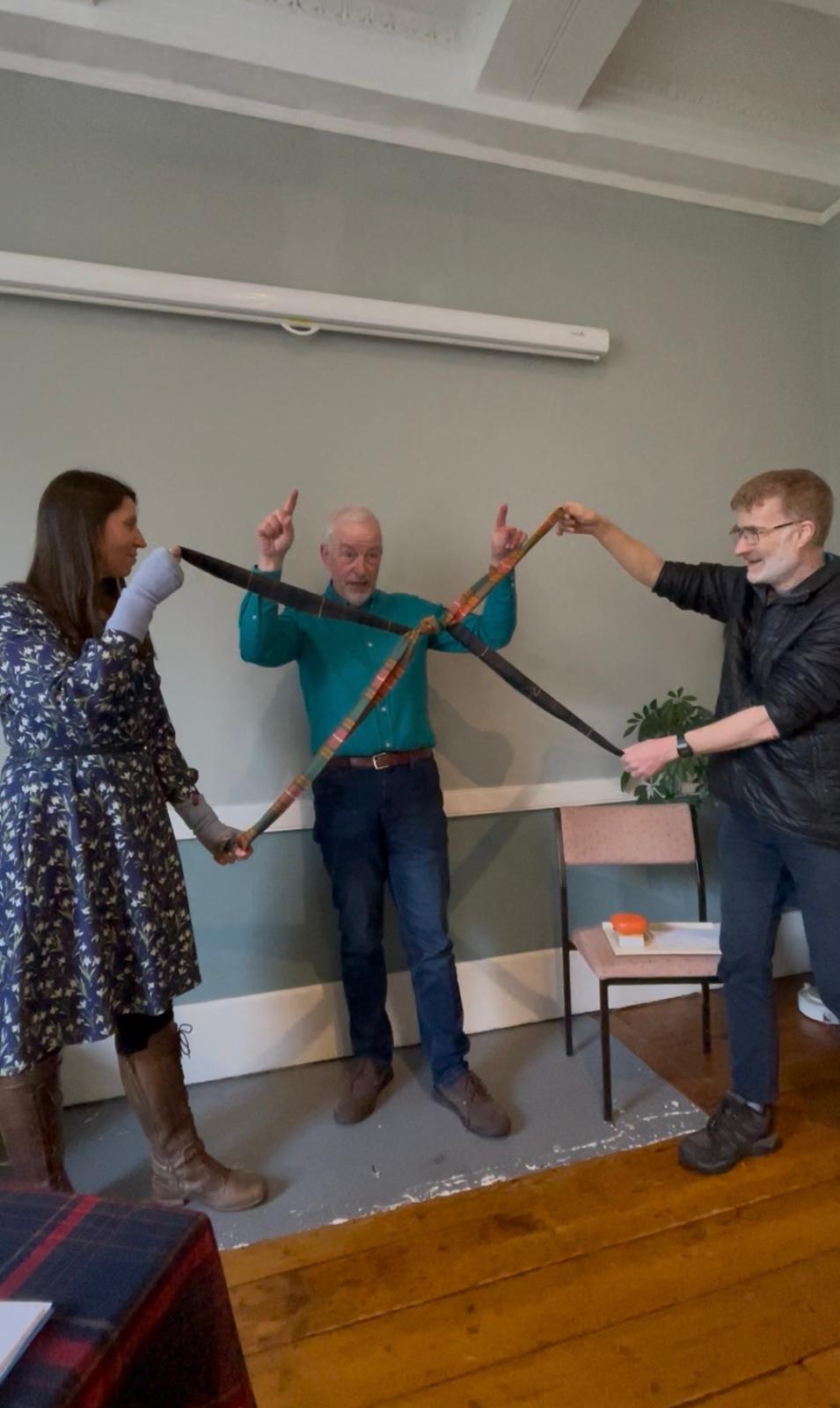
Handfasting Saltire
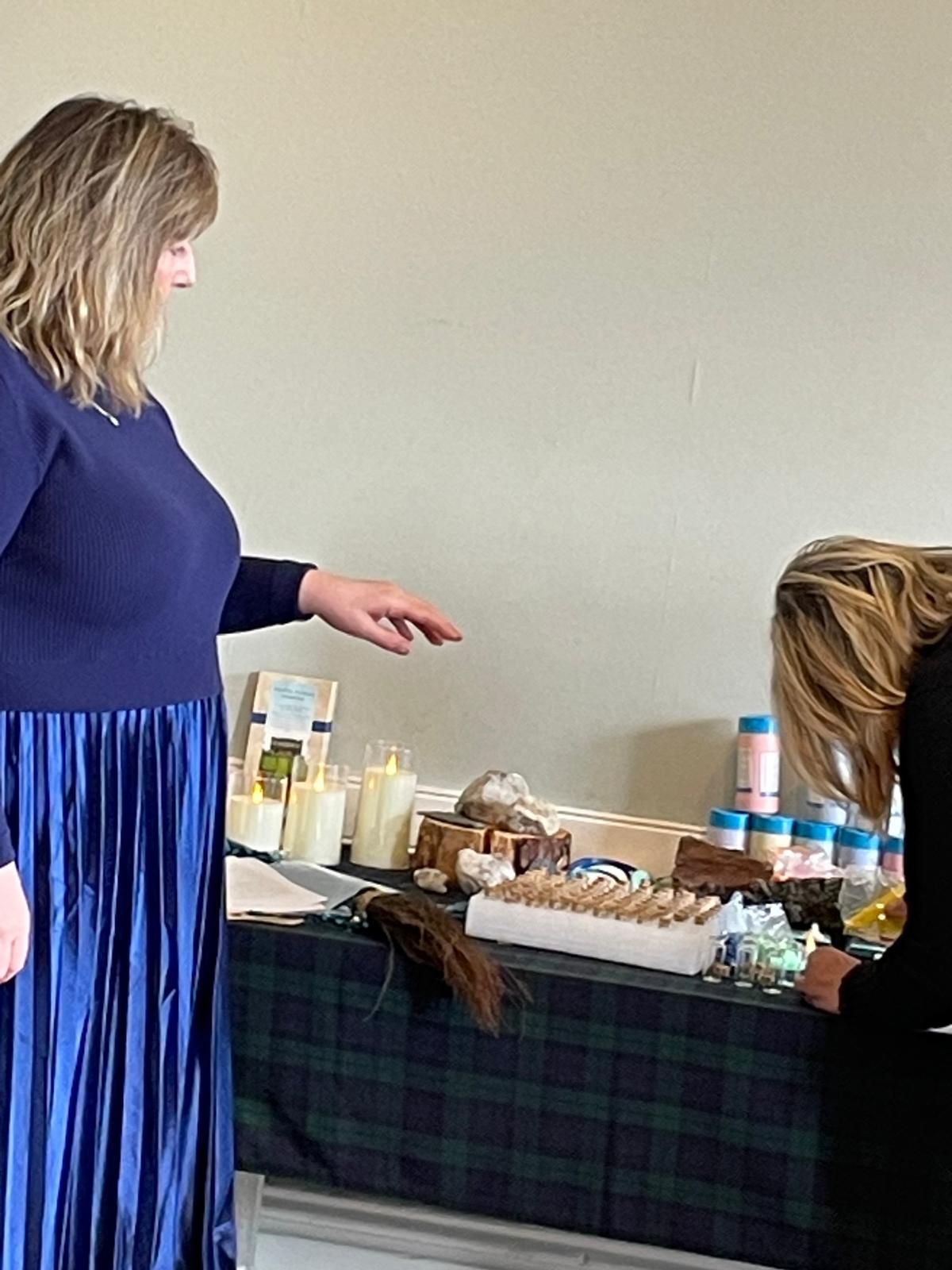
Sand ceremony
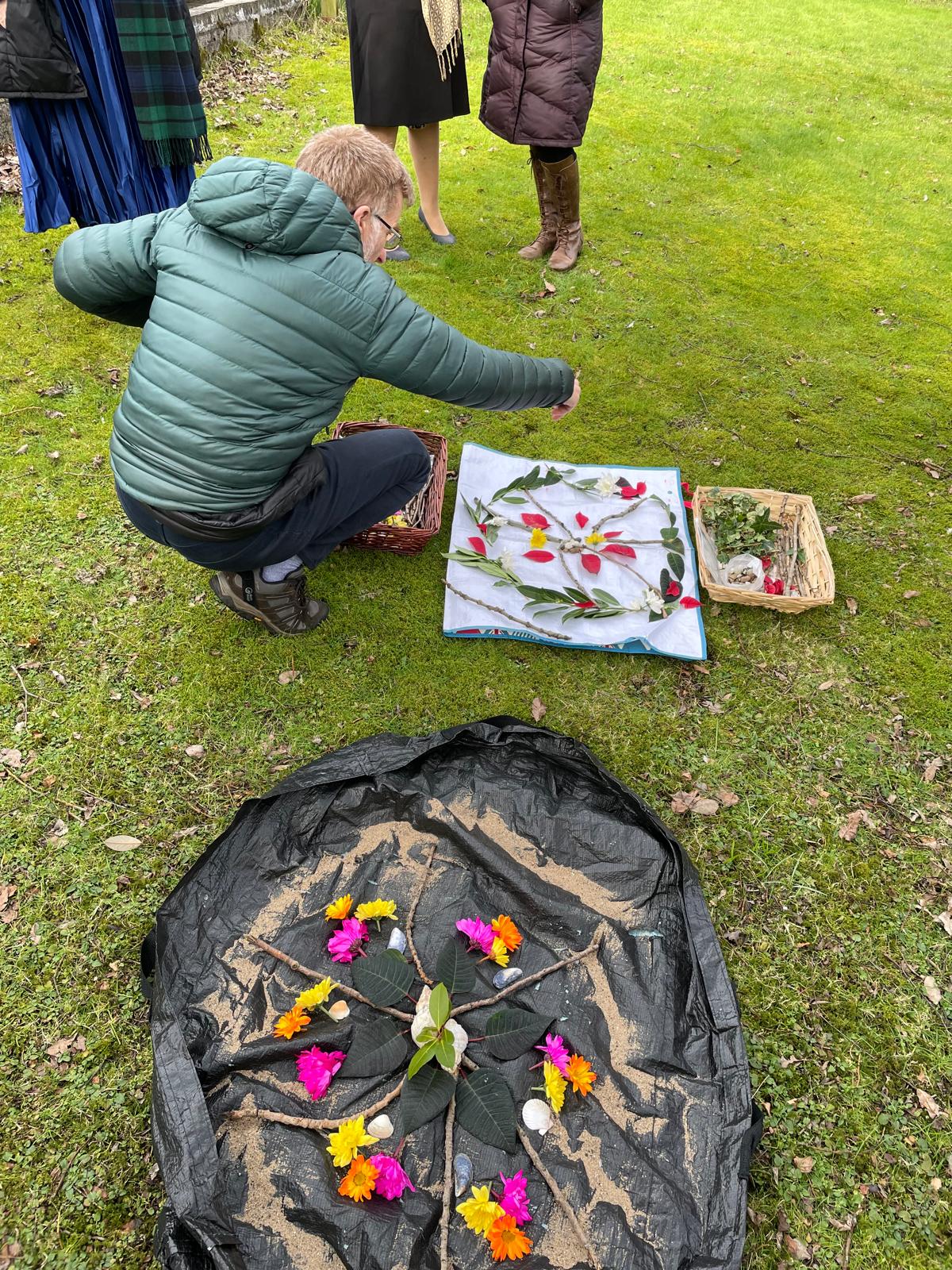
Grief mandalas

© 2024 Scottish Independent Celebrants’ Association
Quick Links
Main Contacts
Diane McLeish, Chair
chair@celebrants.scot
General Enquiries
enquiries@celebrants.scot
Stella McCulloch, Secretary
secretary@celebrants.scot